Algorithmic Randomness and Sustained Engagement Dynamics in Virtual Reel Environments
Written by Bianca Roth · Jun 13, 2026

Algorithmic Randomness and Sustained Engagement Dynamics in Virtual Reel Environments
Random number generators form the core mechanism in digital reel platforms where complex algorithms produce independent outcomes for each spin while extended play patterns emerge from how users interact with those results over multiple rounds. These systems rely on pseudorandom sequences that pass statistical tests for uniformity and independence, and operators integrate them into games to maintain consistent distribution across thousands of sessions. Researchers track these interactions through aggregated gameplay logs that reveal correlations between outcome variance and the length of time individuals remain active on a platform.
Core Mechanics of Random Sequence Generation
Modern digital reels employ cryptographic hash functions or linear congruential generators seeded with external entropy sources such as hardware clocks or network noise, and this process ensures each reel position resolves without reference to previous spins. Data from industry audits show that certified RNG modules undergo millions of test cycles before deployment, while extended sessions introduce cumulative exposure to both winning and losing streaks that influence subsequent betting adjustments. Observers note that platforms adjust reel strip configurations and weighting tables to achieve target return-to-player percentages, yet the underlying randomness remains unaltered regardless of session duration.
Patterns Observed in Prolonged User Interactions
Session analytics collected across multiple jurisdictions indicate that players who encounter frequent small returns tend to extend their activity compared with those facing longer dry spells, and this behavioral response occurs because the algorithm distributes wins according to fixed probability tables rather than adaptive logic. Studies conducted by academic teams at institutions including the University of Las Vegas have quantified average session lengths against volatility indices, revealing measurable differences across game categories. Those who examine these datasets find that hit frequency and bonus trigger rates correlate with retention curves, while total stake amounts per session remain statistically independent of the random sequence itself.
Regulatory and Technical Standards in Mid-2026
By June 2026 several oversight bodies outside the United Kingdom had begun requiring real-time reporting of RNG performance metrics alongside session duration statistics, and platforms responded by embedding additional logging layers that capture both algorithmic outputs and player action timestamps. Australian authorities, for instance, updated their technical standards to include mandatory entropy verification during live operation, whereas Canadian provincial regulators focused on transparency around how extended play data informs responsible gambling tools. These measures operate alongside existing certification frameworks without altering the fundamental randomness of each reel outcome.
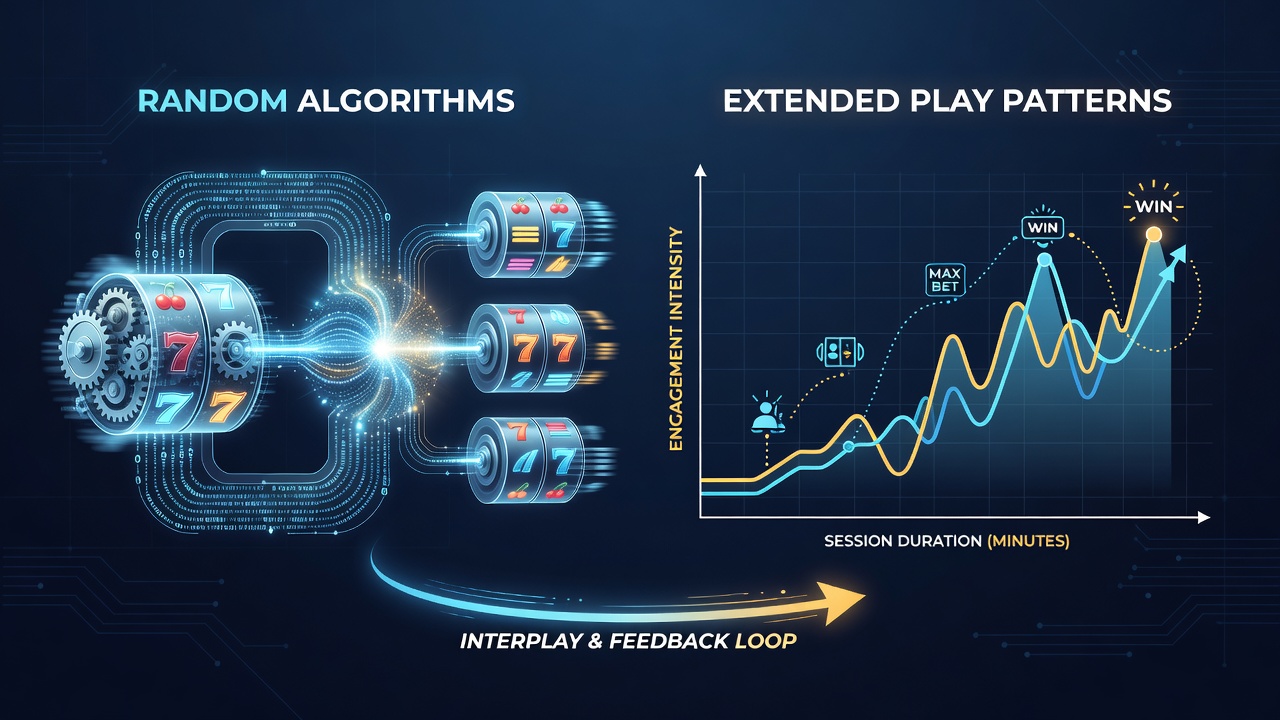
Statistical Relationships Between Variance and Session Length
High-volatility titles produce wider distributions of return outcomes, and data compiled by the Nevada Gaming Control Board demonstrates that these games attract shorter average sessions among casual participants while certain high-stakes users record longer continuous play intervals. Medium-volatility options display tighter clustering around expected returns, which researchers link to steadier engagement curves across broader player cohorts. Analysts at the Australian Gambling Research Centre have published comparative reports that separate algorithmic parameters from behavioral variables, confirming that session extension arises from the interaction of fixed probabilities with individual risk tolerance rather than any directed algorithmic adjustment.
Implementation Across Platform Types
Mobile and desktop environments apply identical RNG cores yet differ in how they present outcome sequences through animation timing and interface feedback, and these presentation layers can extend perceived session length without changing mathematical results. Operators integrate progressive jackpot linkages and feature triggers that activate according to the same random streams, creating layered experiences that sustain activity across repeated spins. Technical documentation from testing laboratories shows that certification covers both base game and bonus round sequences equally, ensuring consistency throughout any duration of play.
Conclusion
The relationship between random algorithms and extended play patterns rests on verifiable probability structures that remain constant while user behavior adapts to sequences of outcomes. Evidence assembled from regulatory reports, academic analyses, and platform telemetry continues to map these interactions through objective metrics rather than interpretive claims. As standards evolve in regions such as Australia and North America during 2026, the underlying separation between algorithmic generation and observed session dynamics stays intact.