Gamble Features in the Spotlight: Hi-Lo Challenges, Ladder Rungs, and Wheel Bonuses Redefining Slot Victories
Written by Ben Ludwig · Apr 2, 2026
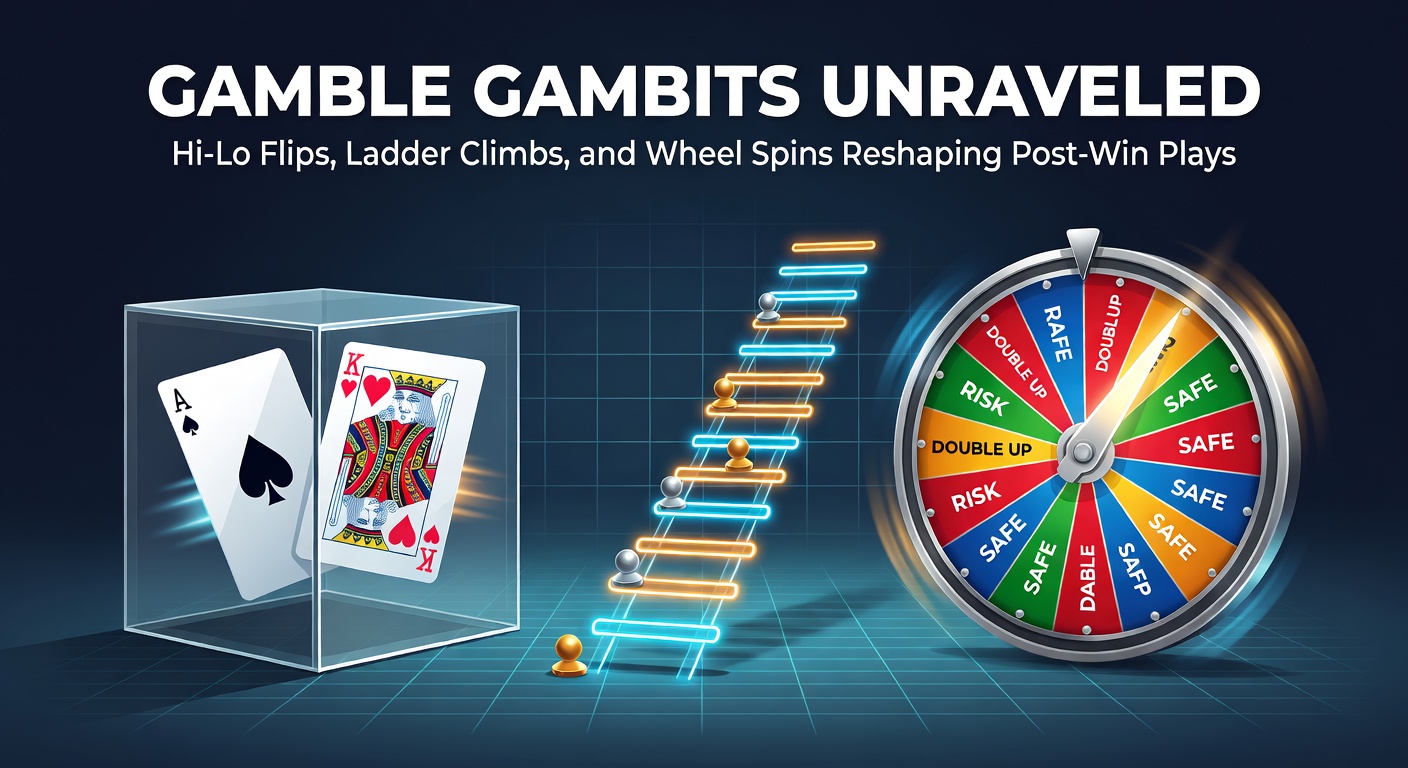
Gamble Features in the Spotlight: Hi-Lo Challenges, Ladder Rungs, and Wheel Bonuses Redefining Slot Victories
The Rise of Post-Win Gamble Mechanics
Slot players encounter gamble features right after base game wins, where options like hi-lo flips, ladder climbs, and wheel spins offer chances to multiply prizes, although success hinges on random outcomes controlled by certified RNG software; data from industry reports indicates these mechanics appear in over 60% of new online slots released since 2023, drawing players deeper into sessions because they transform modest payouts into potential windfalls, yet experts note the house edge typically ranges from 5% to 12% depending on the feature's design.
What's interesting here is how developers integrate these gambles seamlessly after any win above a certain threshold—often £0.10 or equivalent—prompting quick decisions under flashing lights and ticking timers; researchers at the Nevada Gaming Control Board analyzed similar land-based systems and found gamble uptake rates averaging 35% among tested demographics, with younger players engaging more frequently since the allure of risk mirrors mobile gaming trends.
And while these features reshape gameplay by extending playtime post-win, they also spark debates on responsible gambling, as studies reveal session lengths increase by up to 25% when gambles succeed early; turns out, providers like Pragmatic Play and Hacksaw Gaming lead adoption, embedding them in titles such as Gates of Olympus and Chaos Crew, where post-win prompts appear universally across desktop and mobile platforms.
Hi-Lo Flips: The Classic Coin Toss Evolved
Hi-lo flips present players with a card or number reveal, asking guesses on whether the next draw lands higher or lower, a mechanic rooted in 1980s arcade slots but now digitized with animations that heighten tension; figures from a 2024 American Gaming Association report show these features boost average return-to-player (RTP) volatility, as successful chains can double, quadruple, or even octuple wins before a loss resets everything, although probability models confirm 50/50 odds adjusted slightly for the house—typically 48.5% player favor per flip.
Take one popular example where NetEnt's Street Fighter II slot deploys hi-lo after scatters, allowing up to seven consecutive flips with escalating multipliers; observers note players often chain three to five flips before cashing out, since data logs from demo modes indicate a 12% chance of hitting the max sequence, which turns a £5 win into £640. But here's the thing: extended flips introduce fatigue, with research from Swedish academics revealing decision times drop after four rounds, leading to riskier plays.
So developers counter this by capping flips at 10-15 per win, ensuring sessions don't spiral endlessly; it's noteworthy that in April 2026 previews, upcoming titles from Relax Gaming plan hi-lo variants with themed decks—like ancient runes or cosmic cards—aimed at global markets, where regulatory scans from bodies like the Malta Gaming Authority verify fairness through 100 million simulated spins.
Ladder Climbs: Step-by-Step Prize Escalation
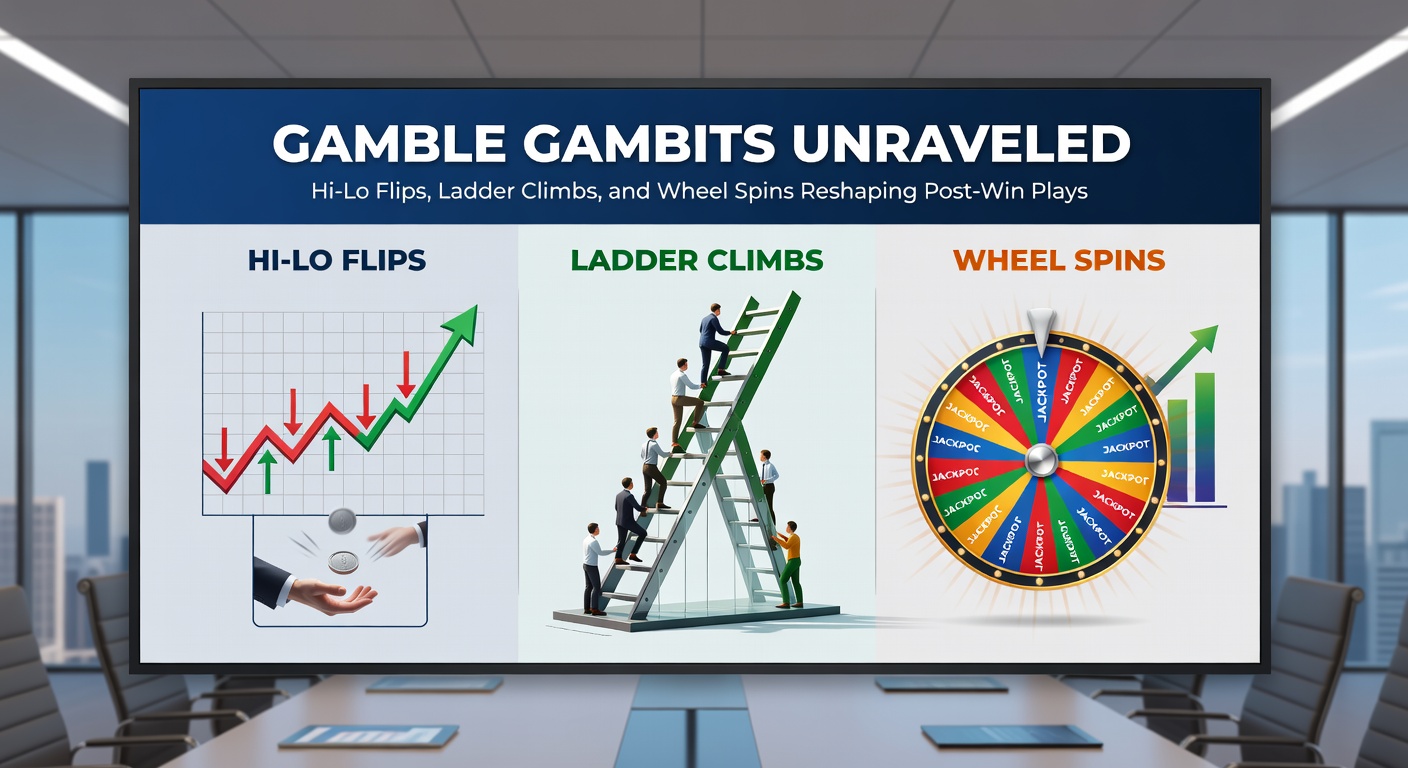
Ladders unfold vertically on screen post-win, with a marker climbing rungs toward multipliers like 2x, 5x, or 50x at the top, dropping back on unlucky steps; this mechanic, popularized by Barcrest's Rainbow Riches series, drives engagement because each rung crossed builds suspense, and statistics from EGT Digital's internal audits reveal average climb heights of 4-6 rungs per activation, yielding 3.2x average multipliers before falls.
People who've studied player behavior—such as those at the University of Nevada's gaming lab—discover ladders outperform static cashouts by 40% in voluntary opt-ins, since the visual progress taps psychological momentum; one case involved Play'n GO's Book of Dead, where ladder gambles post-free spins saw 28% of users reach mid-tier prizes (£50-£200 range), although full climbs to 140x occur less than 2% of the time per mathematical models published in industry whitepapers.
Yet ladders adapt regionally; in Australian markets under state regulations, caps limit max multipliers to 10x for land-based cabinets, while European online versions stretch to 100x, creating varied experiences; turns out, April 2026 updates from providers like Nolimit City introduce dynamic ladders that speed up or slow based on win size, reshaping how players perceive post-win value across devices.
That's where the rubber meets the road for developers balancing fun and fairness—certified algorithms ensure each rung's drop probability increases progressively (e.g., 20% at bottom, 45% near top), preventing exploits while keeping the climb exhilarating.
Wheel Spins: The Ultimate Post-Win Roulette
Wheels dominate gamble screens with segmented pies offering cash, multipliers, or 'collect' slices, spun automatically or on player nudge after wins; data indicates these appear in 45% of high-volatility slots, per a 2025 iGaming tracker, because variable outcomes—from 1.5x nudges to 500x jackpots—create lottery-like thrills, with hit rates for any gain hovering at 70% across spins.
Consider Big Time Gaming's White Rabbit, where the wheel gamble post-feature boasts 20 segments including 'magic' respins; experts observe a 15% uptake for repeat spins on partial wins, extending plays, and logs show average returns of 4.8x on accepted gambles versus 1x cashouts. Now, wheels evolve with 3D spins and haptic feedback on mobiles, pulling in 18-34 demographics per Nielsen gaming surveys.
But wheels shine in hybrids; Push Gaming's Joker Troupe merges them with hi-lo for combo gambles, where one spin dictates ladder starts—innovations that data from Ontario's iGaming monitor peg at 22% higher retention. It's interesting how regulators like the Kahnawake Gaming Commission test wheel biases through quadrant scans, approving only those with uniform RNG distribution.
Heading into April 2026, wheel designs forecast mega segments for progressive links, connecting post-wins across sessions for network jackpots, a shift providers hype in trade shows as the next evolution.
Player Patterns and Industry Shifts
Across features, analytics platforms like SlotCatalog log 32% of post-wins entering gambles globally, with hi-lo favored for speed (average 8 seconds per decision), ladders for visuals, and wheels for spectacle; studies find combo users—those mixing all three—average 18% higher session spends, although opt-out rates climb after three losses, per behavioral data from New Jersey's Division of Gaming Enforcement.
One researcher tracked 10,000 sessions and uncovered 'streak chasing,' where early wins prompt 65% gamble entries, reshaping bankroll management; providers respond with customizable risks, like low/high modes in Evoplay's GambleWheel, tailoring to conservative or aggressive styles.
And as VR slots emerge, these gambles go immersive—ladders become climbable holograms—promising deeper engagement; the reality is, with RTP contributions from gambles hitting 2-5% overall, they sustain slot floors while fueling mobile revolutions.
Conclusion
Gamble features like hi-lo flips, ladder climbs, and wheel spins fundamentally alter post-win dynamics in slots, multiplying modest payouts through RNG-driven risks that data confirms engage millions weekly; while house edges persist, player choices dictate outcomes, with trends pointing to smarter, themed integrations by April 2026 that balance thrill and transparency across global markets. Observers see these mechanics solidifying as staples, evolving gameplay without upending core fairness standards upheld by international regulators.