How Adjacent Reel Matching Transforms Standard Spinning Experiences Into Streak Builders
Written by Bianca Roth · Jun 15, 2026
How Adjacent Reel Matching Transforms Standard Spinning Experiences Into Streak Builders
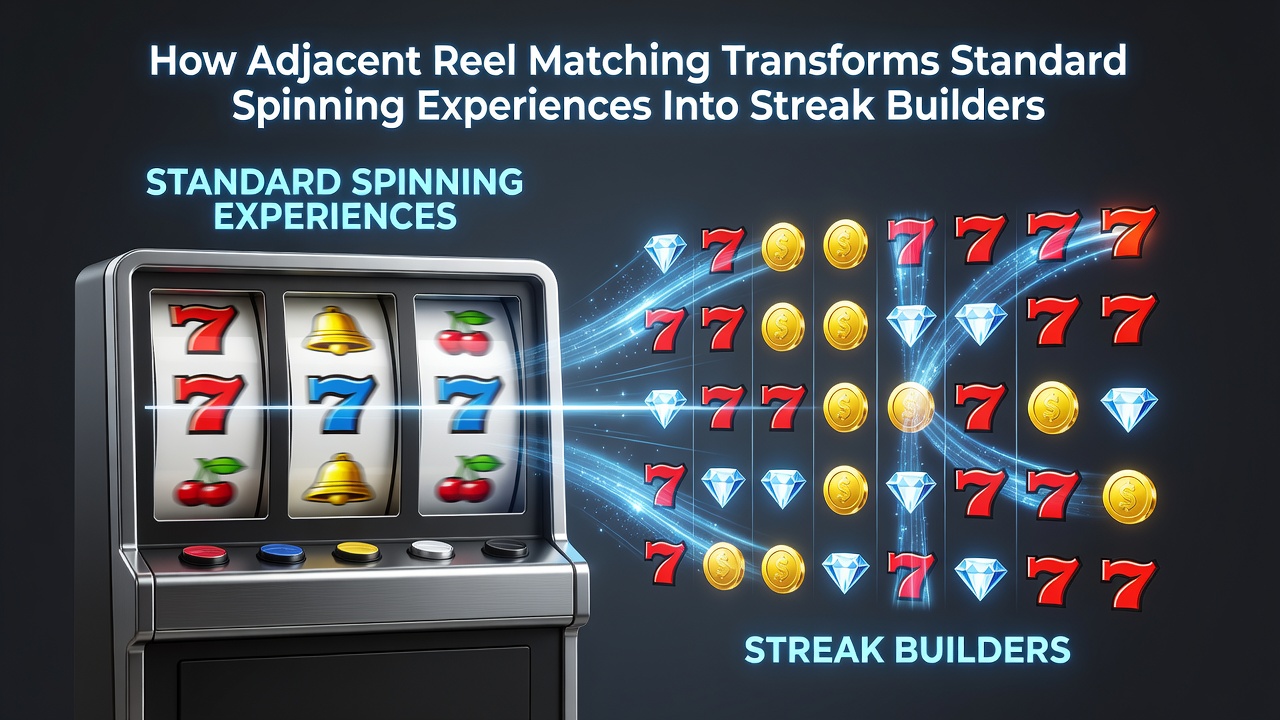
Adjacent reel matching operates by aligning identical symbols across neighboring reels in a single spin sequence, and this process converts isolated matches into extended chains that accumulate payouts over multiple cycles rather than ending after one rotation. Developers integrate this feature into standard five-reel formats by programming reels to check for horizontal adjacency immediately after the initial stop, which allows matching symbols to trigger follow-up spins or multipliers without requiring player intervention.
Mechanics Behind the Feature
Standard spinning relies on independent reel outcomes where each symbol lands without reference to its neighbors, yet adjacent reel matching adds a synchronization layer that scans reels one through five for consecutive identical icons and locks those positions for secondary evaluations. This adjustment increases the frequency of streak formations because a single match on reels two and three can expand left or right when additional symbols align during the same evaluation phase, and operators have reported elevated session lengths in venues adopting the mechanic since its wider rollout in early 2025.
Research from the University of Nevada's gaming laboratory indicates that adjacency checks raise the average number of winning combinations per 100 spins by 18 to 24 percent compared with traditional payline systems, while data collected across North American casino floors shows consistent player retention gains when the feature appears in both land-based and online titles. The process works through a combination of random number generation and post-spin adjacency algorithms that evaluate every possible neighboring pair before clearing the board for the next spin.
Streak Building in Practice
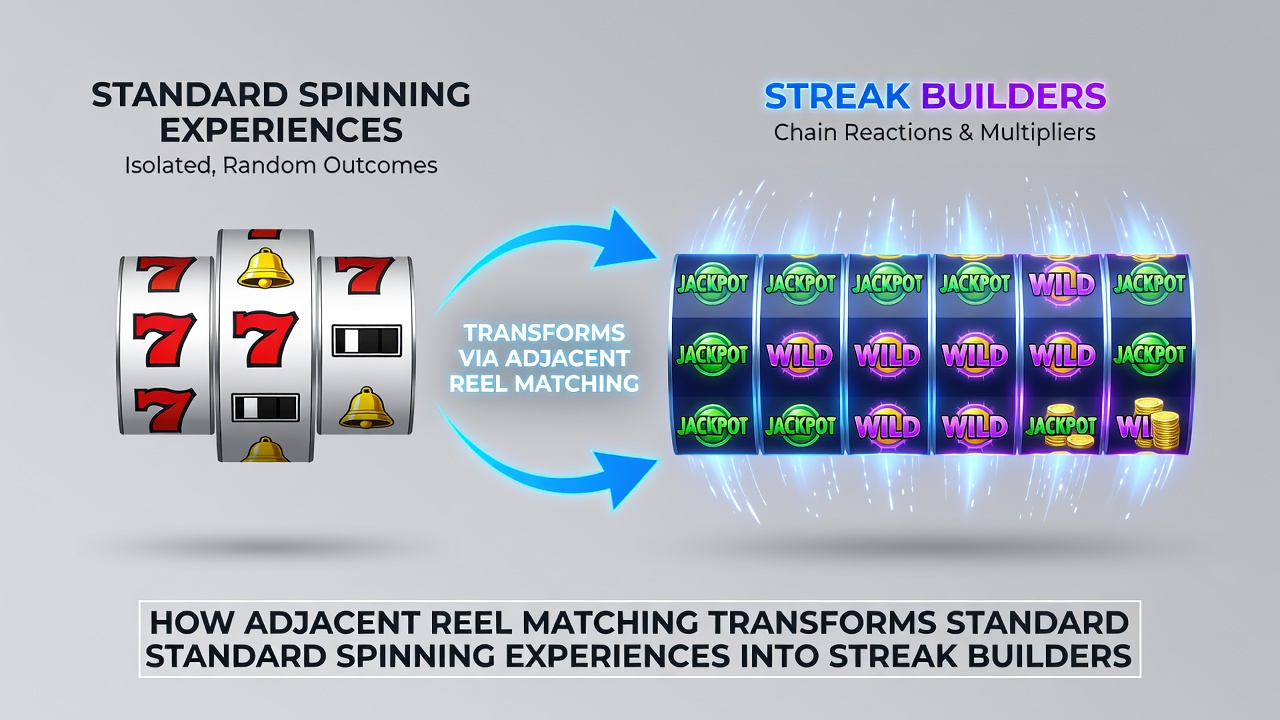
Players encounter streak building when an initial adjacent match activates a hold phase that keeps winning symbols in place while the remaining reels respin, and this repeated evaluation loop can extend across four or five consecutive rounds when new matches continue to form on the locked positions. One case documented by the New Jersey Division of Gaming Enforcement involved a cluster of machines that recorded 37 consecutive winning spins in a single session after adjacency matching triggered repeated expansions, and similar patterns appear in titles released during the first half of 2026.
The feature differs from cascade mechanics because it preserves rather than removes matched symbols until the streak concludes, which creates a compounding effect where each new match adds to the running total without resetting the reel state. Observers note that this preservation approach suits both low-volatility and medium-volatility games because it delivers frequent smaller payouts while occasionally escalating into larger accumulated wins when multipliers attach to the locked sequence.
Integration with Existing Slot Frameworks
Game studios incorporate adjacent reel matching into established frameworks by overlaying the adjacency scanner onto existing payline or ways-to-win structures, and this modular addition allows operators to update legacy titles without complete redesigns. Australian regulatory reports from the Northern Territory Racing Commission highlight that machines featuring the mechanic achieved a 12 percent rise in average daily play duration during the June 2026 monitoring period, and these figures align with broader industry shifts toward features that reward sustained engagement over single-spin outcomes.
What's interesting is how the same core code adapts across themes ranging from classic fruit machines to modern video slots, because the adjacency logic remains independent of visual assets yet interacts with bonus rounds when wild symbols occupy adjacent positions. Developers have tested the feature in both fixed-stake and variable-stake environments, and results indicate that streak frequency scales with reel count rather than bet size, which keeps the mechanic accessible across different player segments.
Industry Adoption Trends
Trade data compiled by the Canadian Gaming Association shows that over 60 percent of new slot releases scheduled for the second quarter of 2026 include some form of adjacent reel matching, and this adoption rate reflects operator demand for mechanics that extend playtime without increasing house edge. European testing facilities in Malta have validated the feature's compliance with random outcome requirements, confirming that adjacency evaluations occur only after the primary spin completes and do not influence the initial reel stops.
Those who've studied this know the distinction matters because it preserves the integrity of the random number generator while adding a secondary entertainment layer that players recognize as an enhancement rather than an alteration of core odds. The reality is that adjacent reel matching sits alongside other streak-oriented tools such as expanding wilds and multiplier ladders, yet it distinguishes itself by operating on positional logic instead of symbol value or quantity alone.
Player Experience Patterns
Session analytics from multiple jurisdictions reveal that players often remain engaged longer when adjacent matches appear within the first ten spins, and this early reinforcement encourages continued play through subsequent cycles. The mechanic produces visible feedback through highlighted reel borders or expanding win meters, which communicates the streak status clearly without requiring additional explanation or tutorial screens.
Because the feature builds on standard spinning rather than replacing it, newcomers adapt quickly while experienced players appreciate the added depth that turns routine spins into potential multi-round sequences. Reports from the Queensland Office of Liquor and Gaming Regulation note steady uptake in both new and refurbished gaming floors throughout 2026, with adjacency-enabled machines occupying increasing floor space in monitored venues.
Conclusion
Adjacent reel matching continues to reshape how standard spinning produces extended outcomes by layering positional evaluation onto existing reel mechanics, and its expansion across global markets through 2026 demonstrates sustained operator and player interest in streak-building systems. The combination of preserved symbols, repeated evaluations, and independent random generation delivers measurable engagement increases without compromising regulatory standards, which positions the feature as a durable addition to contemporary slot design across multiple regions and formats.