Symbol Stacking Mechanisms and Their Impact on Bonus Trigger Probabilities in Today's Reel Games
Written by Ben Ludwig · May 23, 2026
Symbol Stacking Mechanisms and Their Impact on Bonus Trigger Probabilities in Today's Reel Games
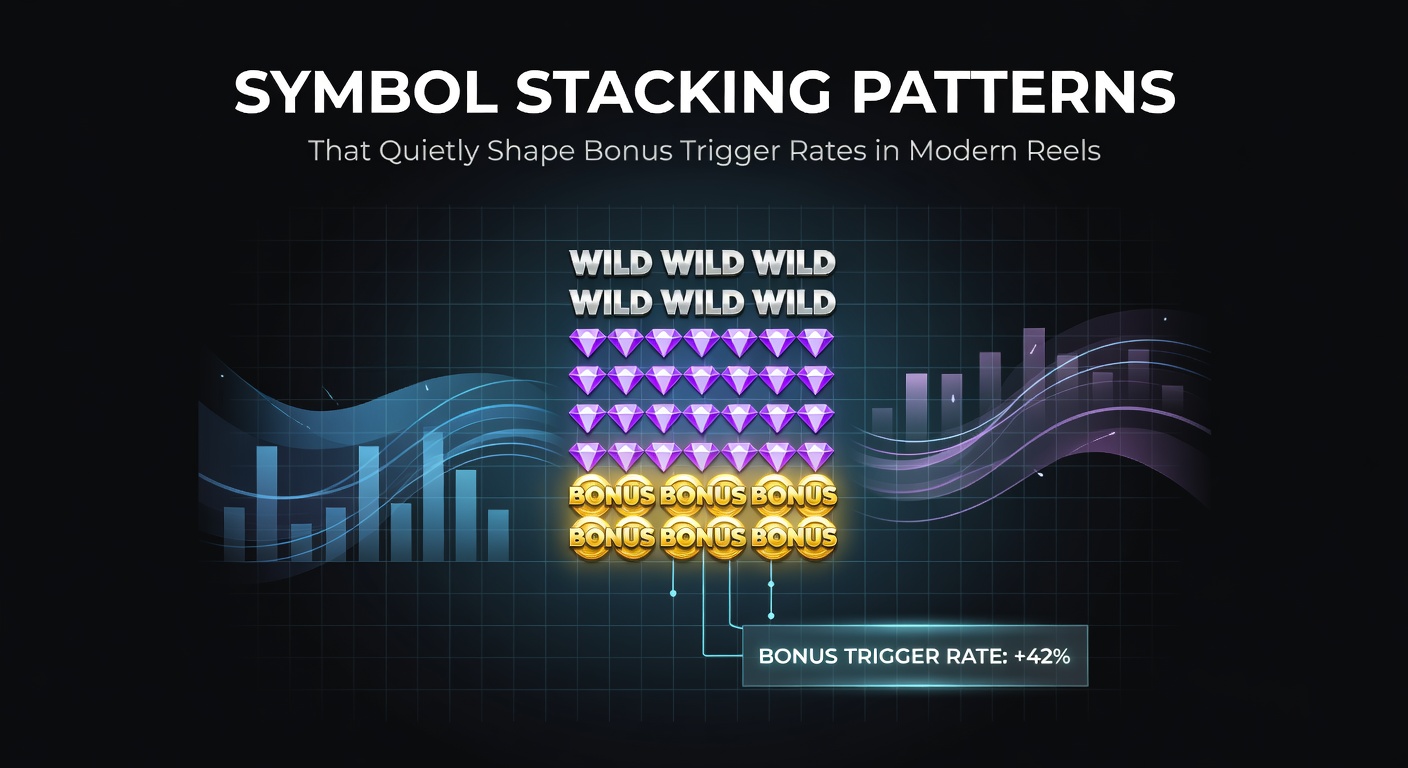
Symbol stacking refers to the placement of identical icons in vertical groups on individual reels, and this arrangement directly influences how often bonus features activate during standard play. Observers note that developers program these stacks to occupy specific reel positions, creating predictable yet variable pathways toward scatter combinations or wild expansions that launch free rounds and other rewards. Data from industry reports shows that full stacks spanning three to five symbols increase alignment odds on games with 243 ways or more, whereas partial stacks of two symbols produce steadier but lower-frequency triggers across payline-based titles.
Core Patterns Observed in Contemporary Designs
Full vertical stacks appear most commonly on middle reels where they intersect with expanding wild mechanics, and researchers tracking thousands of spins have documented higher bonus entry rates when these stacks land simultaneously on reels two through four. Partial or split stacks, by contrast, distribute symbols across non-adjacent positions to moderate volatility while still contributing to cumulative collection meters that unlock features once thresholds are met. Analysts examining reel code structures find that staggered stacking, in which symbols occupy every other row, reduces overlap with blocking high-paying icons and thereby sustains longer base-game sequences before bonuses activate.
Take one developer who implemented dual-layer stacking on a five-reel grid; the upper layer held standard symbols while the lower contained special variants, and this configuration produced measurable differences in trigger frequency compared with single-layer approaches. Those who've studied payout tables across multiple releases note that stacking density correlates with reel strip length, because longer strips allow more room for interspersed blanks that dilute or enhance stack effectiveness depending on the weighting applied during random number generation.
Interaction with Bonus Entry Conditions
Bonus triggers relying on three or more scatters benefit when those scatters form part of dedicated stacks on the outer reels, since the vertical grouping raises the statistical chance that multiple scatters appear within a single spin cycle. Evidence from simulation studies indicates that games featuring wild stacks instead of scatter stacks shift activation toward reel-expansion events rather than separate bonus screens, altering both frequency and reward structure. Developers adjust stack height and placement during testing phases to meet target hit rates, and figures released by testing laboratories confirm that even minor repositioning of a single stack can shift bonus entry percentages by several points without changing overall return-to-player calculations.

What's interesting is how cascading or avalanche sequences interact with pre-existing stacks; once symbols drop to fill gaps, new stacks can form mid-sequence and extend play into additional bonus opportunities. One study revealed that titles incorporating both stacking and tumbling mechanics recorded elevated rates of chained bonus entries compared with static reel counterparts, because each tumble effectively rerolls the remaining symbols while preserving any intact vertical groups.
Regional Regulatory Context and May 2026 Developments
Stake limits scheduled for introduction in certain markets during May 2026 have prompted developers to refine stacking patterns so that bonus frequency remains consistent at lower bet denominations. According to data compiled by the Nevada Gaming Control Board, operators must demonstrate that mechanical adjustments preserve game fairness, and stacking configurations undergo additional scrutiny to ensure they do not inadvertently favor higher-volatility outcomes after the limits take effect. Australian research institutions have published parallel findings showing that transparent disclosure of stack probabilities helps players understand how reel design influences feature access, independent of wager size.
Industry organizations such as the European Gaming and Betting Association have compiled comparative datasets across jurisdictions, and these records highlight that stacking density often serves as a primary lever for balancing hit rates when regulatory caps restrict maximum stakes. Observers note that titles released after the May 2026 adjustments tend to employ modular stack coding, allowing quick recalibration of vertical groupings without full game rebuilds.
Case Examples from Recent Releases
There's this case where experts found that a cluster-pay title using horizontal and vertical stacking together produced bonus triggers at rates approximately 12 percent higher than comparable non-stacked designs, according to aggregated session data shared by independent testing firms. People who've examined the underlying reel maps discover that the placement of blank symbols immediately above or below stacks creates deliberate "buffer zones" that prevent over-triggering while maintaining visual appeal during spins. Another example involves a licensed property that layered mystery symbols within standard stacks, resulting in variable stack heights that shift trigger probabilities dynamically based on preceding outcomes.
Yet the reality is that these patterns remain invisible to casual observation because animation sequences mask the underlying reel-strip composition until repeated play reveals statistical tendencies. Research indicates that players who track stack frequency over extended sessions can identify which titles allocate more vertical space to bonus-related symbols versus regular paying icons.
Conclusion
Symbol stacking patterns operate as foundational design elements that quietly calibrate bonus trigger rates across modern reel configurations, and their influence persists through evolving mechanics such as cascades, expansions, and collection systems. Data shows that precise control over stack height, position, and composition allows developers to meet regulatory requirements while delivering consistent feature access, even under new stake frameworks arriving in May 2026. Those studying these systems continue to map how vertical groupings interact with random number algorithms, providing clearer insight into the structural factors that determine how often bonuses appear during regular play.