Tracing the Development of Bonus Round Innovations from Early Designs to Today's Interactive Experiences
Written by Ben Ludwig · Jun 27, 2026
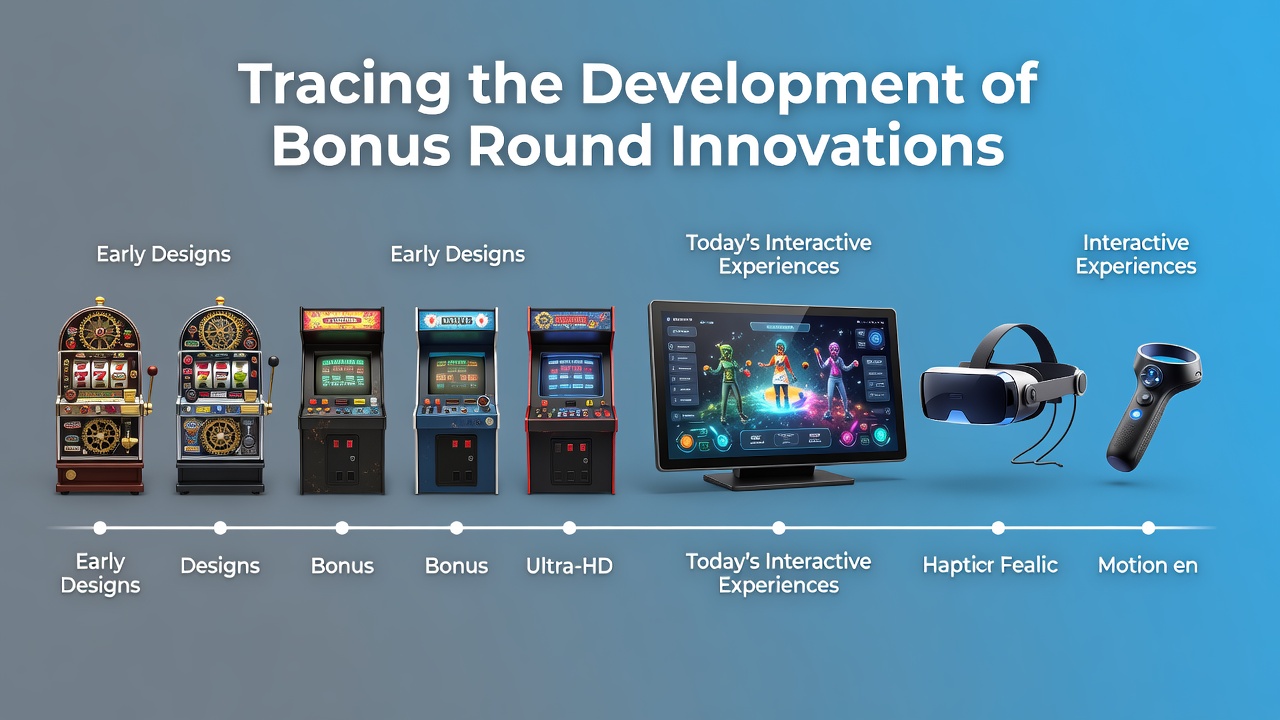
Tracing the Development of Bonus Round Innovations from Early Designs to Today's Interactive Experiences
Slot machines first introduced bonus rounds as straightforward additions to standard reel spins during the late 1970s and early 1980s when mechanical designs relied on physical reels and limited payout structures, and these early features typically awarded fixed multipliers or small credit prizes without any player input beyond the initial bet placement.
Manufacturers such as Bally and IGT expanded these elements through the 1980s by adding basic free spin sequences that triggered after specific symbol combinations landed on the payline, yet the mechanics stayed linear and offered no branching outcomes or decision points for participants.
Transition to Video Technology and Initial Interactivity
Video slot machines arrived in the mid-1990s and shifted bonus rounds toward selectable elements where players could choose from hidden items on screen to reveal prizes, and this change occurred as digital displays replaced physical reels while software allowed for animated sequences that responded to user selections in real time.
Games like Wheel of Fortune incorporated wheel spins as central bonus events that combined random outcomes with visual spectacle, and similar titles soon followed with pick-and-reveal formats that increased engagement without altering the core random number generator processes.
Expansion Through the 2000s and Multi-Stage Features
Developers layered multiple stages into bonus rounds throughout the 2000s, creating sequences where initial selections led to further mini-games or escalating multipliers, while regulatory approvals from bodies such as the Nevada Gaming Control Board ensured compliance with fairness standards across these evolving formats.
Progressive jackpot bonuses emerged alongside these developments and tied individual machine play to networked prize pools that grew with each wager, and data from the American Gaming Association shows these features contributed to higher average session times at regulated venues during that decade.
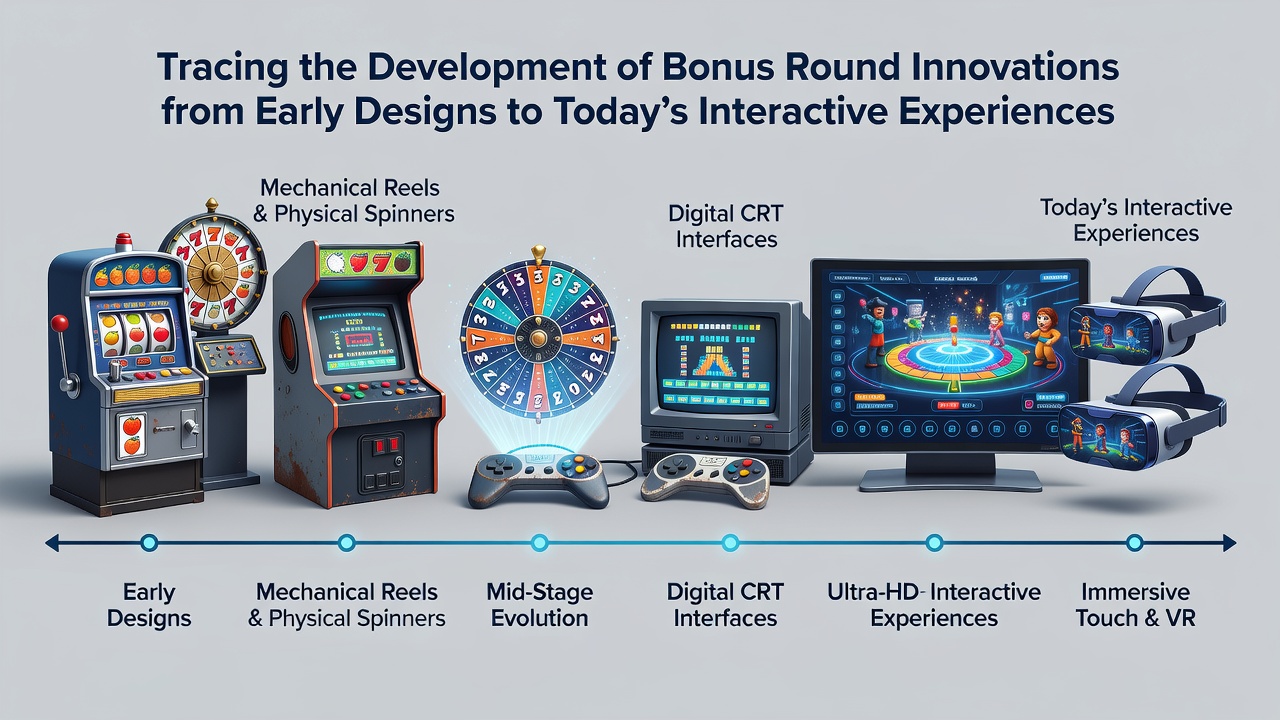
Three-dimensional graphics and narrative themes entered bonus designs by the early 2010s, allowing rounds to unfold like short stories where player choices influenced visual paths even as underlying probabilities remained governed by certified algorithms.
Contemporary Interactive Experiences and Gamification Elements
Current bonus rounds integrate gamification tools such as level progression, mission objectives, and dynamic multipliers that adjust based on accumulated performance within a session, and these systems appear across mobile and desktop platforms where touch interfaces enable precise selections during feature play.
Research from the University of Nevada, Las Vegas Center for Gaming Research indicates that interactive elements in bonus rounds correlate with extended play patterns in both land-based and online environments as operators adopt these mechanics to differentiate titles within crowded markets.
Adaptive bonus structures now incorporate real-time adjustments drawn from player behavior data while maintaining strict separation between entertainment layers and random outcome generation, and European regulatory frameworks including those overseen by the Malta Gaming Authority require transparent disclosure of how such features calculate returns.
Virtual reality prototypes tested in 2025 demonstrated fully immersive bonus environments where participants navigate three-dimensional spaces to trigger additional rewards, and these experiments continue into June 2026 with hardware improvements that reduce latency during extended feature sequences.
Conclusion
Bonus round development has progressed from fixed mechanical triggers to sophisticated interactive systems that blend animation, choice mechanics, and networked progressions while preserving certified randomness at every stage, and ongoing technological refinements suggest further integration of adaptive narratives and cross-platform continuity in future releases.